

Articles · Writing and press · Kim Wolffensperger
Thoughts, opinions and things I notice.
What I notice, what I'm curious about and where I stand. From the set to the industry and everything that's changing in it.
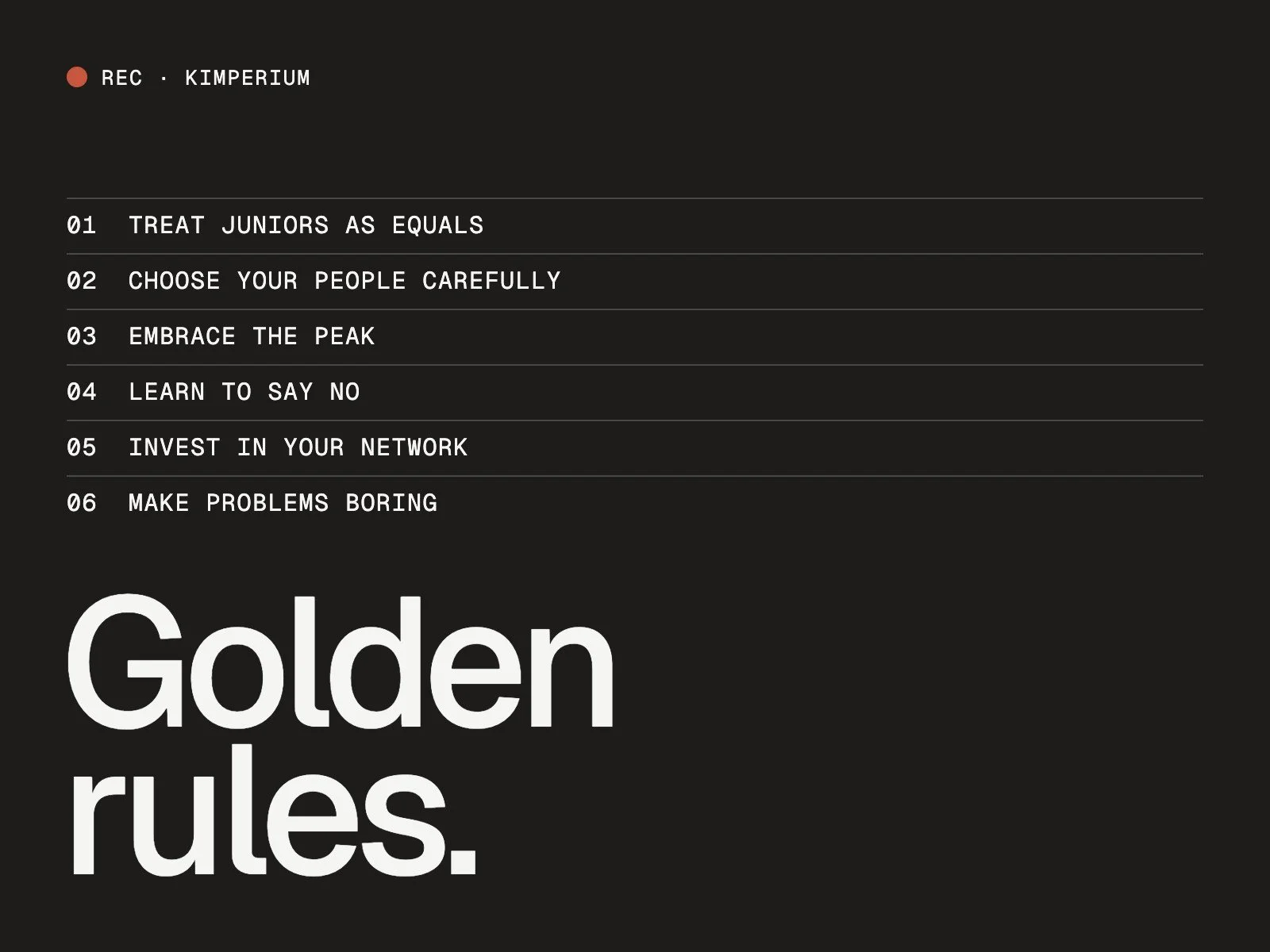
My golden production rules
“The best producers aren’t the ones who never face problems. They’re the ones who make problems boring.”
After 20 years in production, someone asked me what my golden rules are. Here are the six I live by, from treating juniors as equals to learning to say no.
After 20 years in production, someone recently asked me during an introduction meeting what my “golden production rules” are.
It threw me for a second, because the things you live by every day aren’t always the things you put into words.
So I sat down and wrote them out. Here are mine:
Treat juniors as equals
Juniors and interns aren’t just there to learn from you, you’re there to learn from them. Each new generation brings fresh ideas and perspectives you’ll rely on as you grow more senior. They develop fast, and before you know it, they’re the ones leading the way. Invest in them, respect them, stay curious.
Choose your people carefully
You’re responsible for time, budget and execution, but none of that works without the right people. Surround yourself with talented, trustworthy, fun collaborators who just get you. After months of working side by side, what stays with you isn’t the award, it’s the energy and joy that made the work possible.
Embrace the peak
Every production hits a stress peak. The good thing about advertising is that deadlines are fixed, which means the peak always ends. Embrace that moment of intensity and remind yourself it will pass. Production isn’t about waiting for the storm to pass, it’s about learning to dance in the rain.
Learn to say no
If the budget is too small, the timeline unrealistic or the script unworkable, say it. Protect the project with the iron triangle: time, budget and quality. You can’t squeeze all three, so at least two need to be strong. A clear “no” isn’t negativity, it’s leadership and integrity.
Invest in your network
Never underestimate the power of your network. Discover new talent, watch showreels, meet directors, respond to cold outreach. Someone once opened a door for you, and now it’s your turn to open it for others. The industry moves fast, so stay connected, stay curious, stay aware.
Make problems boring
The best producers aren’t the ones who never face problems. They’re the ones who make problems boring, by spotting them early and handling them calmly. Communicate early, clearly and often. Flag risks before they turn into fires. Share updates before people start asking. Set expectations before anyone gets nervous. Say no when you need to, but always bring a solution.
And when chaos hits, stay calm. Slow your breathing, speak softer. Your energy sets the tone. A grounded producer makes everyone around them better, and that’s the real superpower.
These are mine. I’m curious: what rules do you live by?
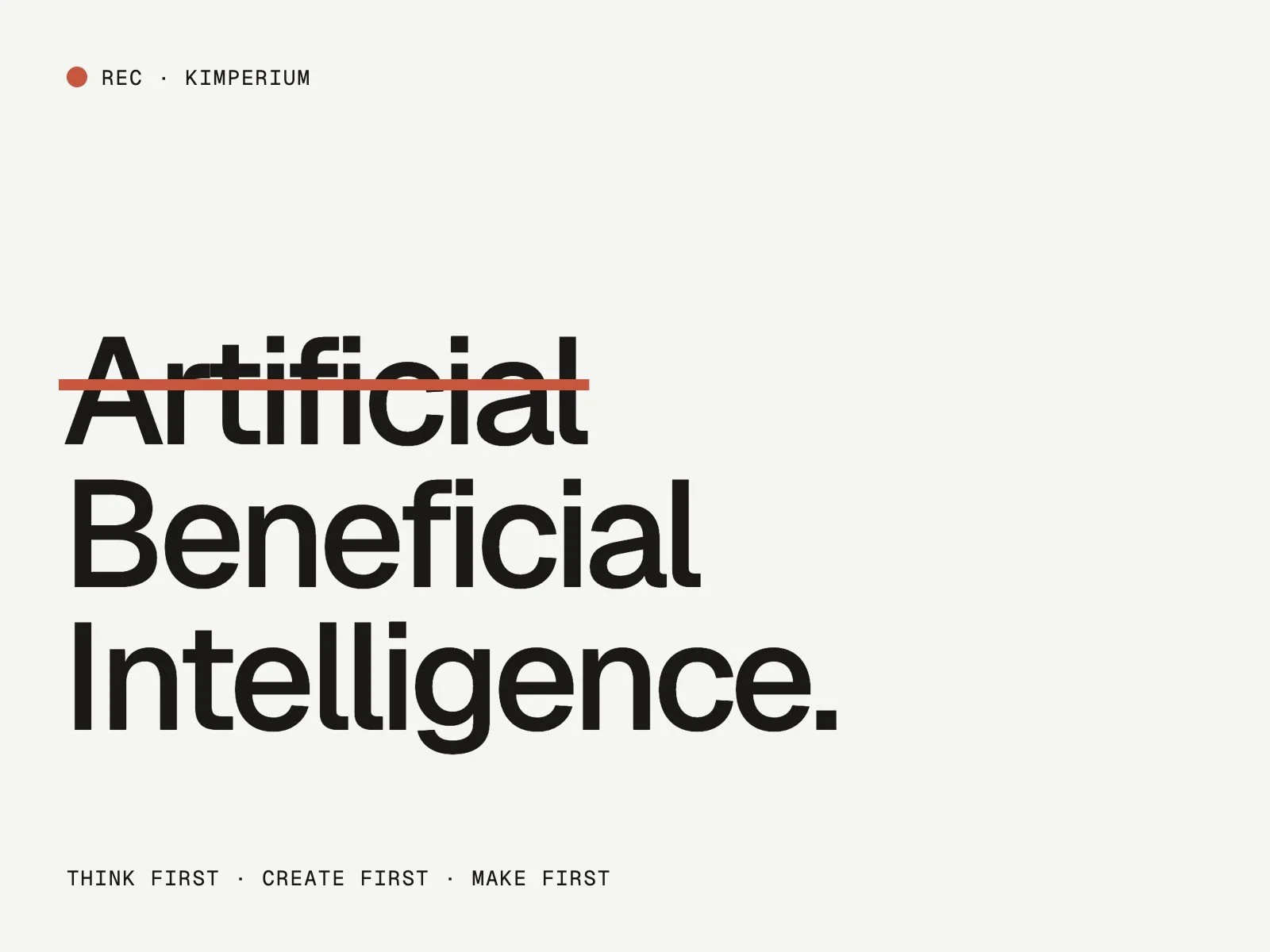
From Artificial to Beneficial Intelligence
“What if you prompted yourself first, before turning to ChatGPT?”
My LinkedIn feed is overflowing with AI-made posts and images, and yes, I’ve joined in myself. Why I’d rather see Beneficial Intelligence than Artificial.
My LinkedIn feed is overflowing. AI-generated posts, AI-made images, makers proudly showcasing everything they’ve created with AI. And yes, guilty! I’ve joined in myself.
I started a handmade lamp business out of a need to express my creativity. Yet I caught myself showcasing it with slick AI social posts and films generated by a machine. Isn’t that the opposite of being truly crafty?
And maybe that’s why I spot them so easily: the ChatGPT posts stuffed with random emojis, the identical build-up, those odd dashes where good old commas should be. The images, too perfect to be real, polished into sterility. Once you see it, you can’t unsee it.
AI once felt shiny and exciting, the new hype we couldn’t resist. But when the gloss wears off, the cracks show. And what’s left feels… fake. It’s even in the name: Artificial Intelligence. Artificial: synthetic, not real, fake smart. And who actually enjoys fake?
What if we shifted the focus? From Artificial to Beneficial Intelligence. Not machines pretending to be human, but tools that support us. Tech that strengthens our craft, sharpens our creativity and amplifies what makes us truly human. Because in the end, how do we distinguish ourselves creatively without cheating?
This is what I mean by Beneficial: think first, create first, make first. And only then ask for help. Use the tools not to replace your ideas or creativity, but to polish your own masterpiece, to refine what is already yours. The result: authentic work you can proudly call your own, with technology supporting rather than replacing you.
Beneficial Intelligence, that’s the kind of intelligence I’d actually like to see more of in my feed.
So tell me, are we still in love with “artificial”, or is it time for something a bit more human? What if you prompted yourself first, before turning to ChatGPT?
Written by me, only polished by ChatGPT.
In the press
What others have written.
Adformatie · September 2026
In-house rukt op, maar bureaus blijven hard nodig
On the rise of in-house creative teams at brands like ASN Bank and Vandebron, and why outside expertise stays essential.
Read on Adformatie (subscription)ASN Bank Newsroom · July 2026
ASN Bank lanceert nieuwe merkcampagne met collectief van onafhankelijke specialisten
ASN Bank launches its new brand campaign, made by a collective of independent specialists instead of a traditional agency. I was part of the core team as Head of Production.
Read on ASN Bank Newsroom